Results day playbook
Results day checklist: from your score to the next step
Results day checklist for 16 November 2026: what to do after you get your UAT-UK score, from saving the full result and checking UCAS delivery to interviews.
· 7 min read · 5 sections

First step: The score lives in your UAT-UK account. Save a copy first, then look at converters or discussion threads.
Delivery: Automatic through UCAS
Score format: One TMUA total; one per ESAT module; two TARA modules
Continued inside →Interview desk
Cambridge interviews open in 21 days
Invitation season: a guide for every course we cover
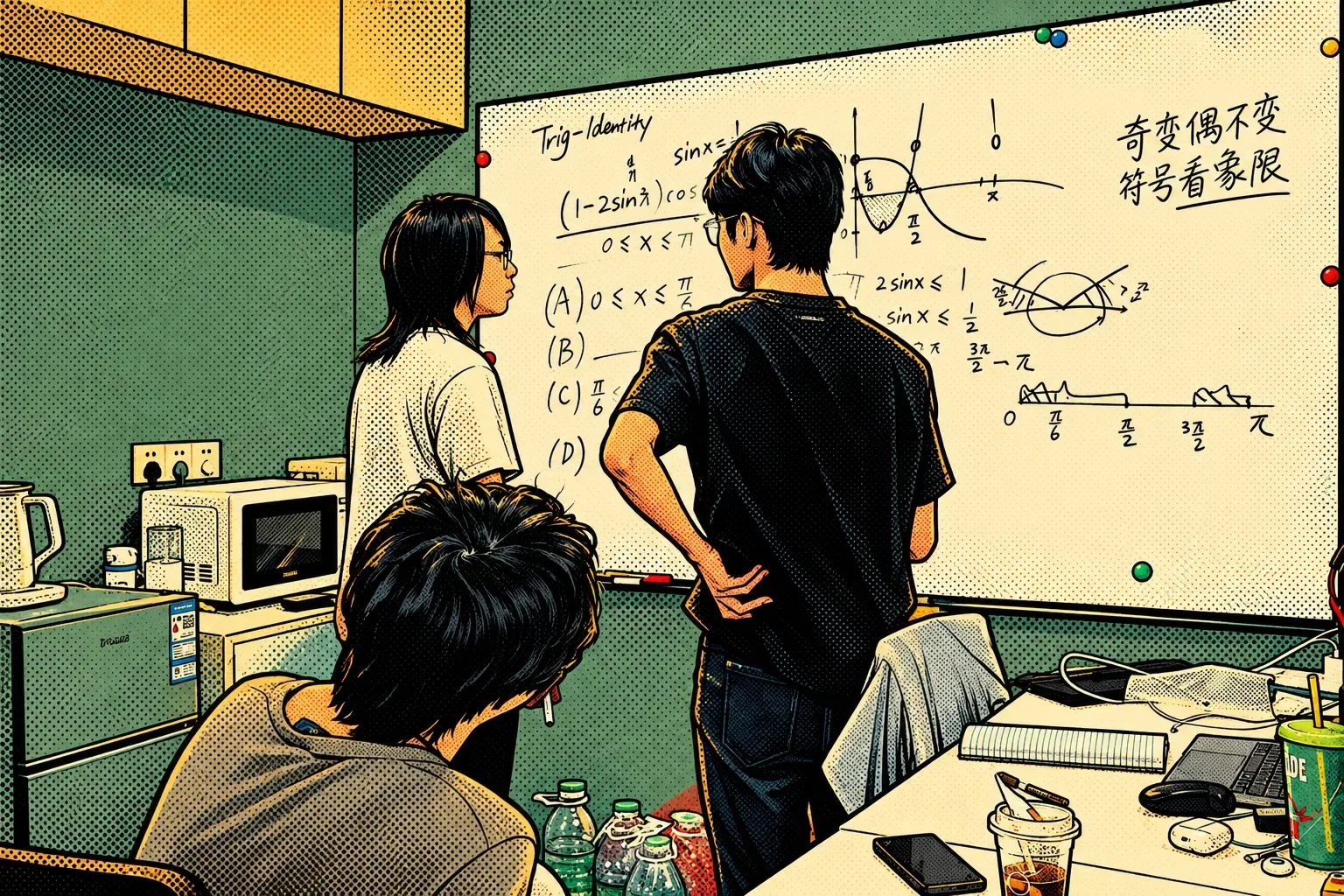
Cambridge Maths interview
Cambridge Maths: the conversation between the TMUA and STEP
After the TMUA and before STEP, the Cambridge Maths interview watches how you do mathematics, live.
Try this one · original practice
In how many ways can you tile a 2 × n strip with 1 × 2 dominoes? What about a 3 × n strip?
Hints, step by step →In brief · by course
- Imperial Materials interviewImperial Materials Science and Engineering sets no admissions test; instead there is a full applicant day.
- Oxford PPE interviewAbout 38% of Oxford PPE applicants are interviewed and 12% receive an offer; the interview tests reasoning, not memorised knowledge.
- Oxford E&M interview18% of Oxford E&M applicants are interviewed and 5% receive an offer; the interview does not test economics or management you have studied.
- Oxford Maths interviewOxford Mathematics now uses both TMUA papers; interviews are online in December, about 25 minutes each.
- Oxford CS interview21% of Oxford Computer Science applicants are interviewed and 7% receive an offer; the TMUA decides who is interviewed, and each interview runs like a 30-minute tutorial.
- Oxford Engineering interview37% of Oxford Engineering applicants are interviewed and 15% receive an offer; the interview and the ESAT score together decide who is made an offer.
- Oxford Physics interview31% of Oxford Physics applicants are interviewed and 11% receive an offer; the interview watches you turn an unfamiliar situation into mathematics and read the physics back out.
- Oxford Chemistry interviewOxford Chemistry has no admissions test; 63% of applicants are interviewed and 17% receive an offer, so selection happens mostly at interview.
- Oxford Biology interview46% of Oxford Biology applicants are interviewed and 15% receive an offer; the interview is less about facts than how you read a graph or a dataset in front of you.
- Oxford English interview67% of Oxford English applicants are interviewed and 22% receive an offer; there is no test, so your written work and how you read an unseen text carry the weight.
- Oxford History interview74% of Oxford History applicants are interviewed and 23% receive an offer; there is no test, and the interview may cover your essay and a short passage.
- Oxford Materials interview62% of Oxford Materials applicants are interviewed and 22% receive an offer; there is no admissions test for 2027 entry, and every shortlisted candidate is interviewed by two colleges.
- Cambridge Engineering interviewAfter three ESAT papers, the Cambridge Engineering interview hands you an unfamiliar physical situation and watches you reason it out loud.
- Cambridge NatSci interviewCambridge Natural Sciences applicants choose Physical or Biological, and that choice shapes what the interview asks.
- Cambridge Economics interviewCambridge Economics interviews test whether you can connect mathematics to economic intuition, and College requirements vary widely.
- Cambridge CS interviewCambridge Computer Science saw 14 applications per place; after the TMUA, the interview checks whether you can think a problem all the way through.
- Cambridge English interviewCambridge English saw 3 applications per place; most Colleges set no test, so two pieces of written work and close reading at interview decide it.
- Cambridge History interviewCambridge History saw 4 applications per place; your written work and how you handle evidence at interview matter most.
- Imperial BME interviewNo admissions test, so the interview day is the exam: a 20-minute interview, two group tasks and a student Q&A, all on Teams.