
TMUA · Exam guide
Test of Mathematics for University Admission
The admissions test for mathematics, computer science and economics degrees: two 75-minute papers, one overall score from 1.0 to 9.0.
- Format
- 2 × 75 min
- Questions
- 2 × 20 multiple choice
- Restrictions
- No calculator / dictionary
- Score range
- 1.0 – 9.0
22
past papers
9
mocks
866
questions
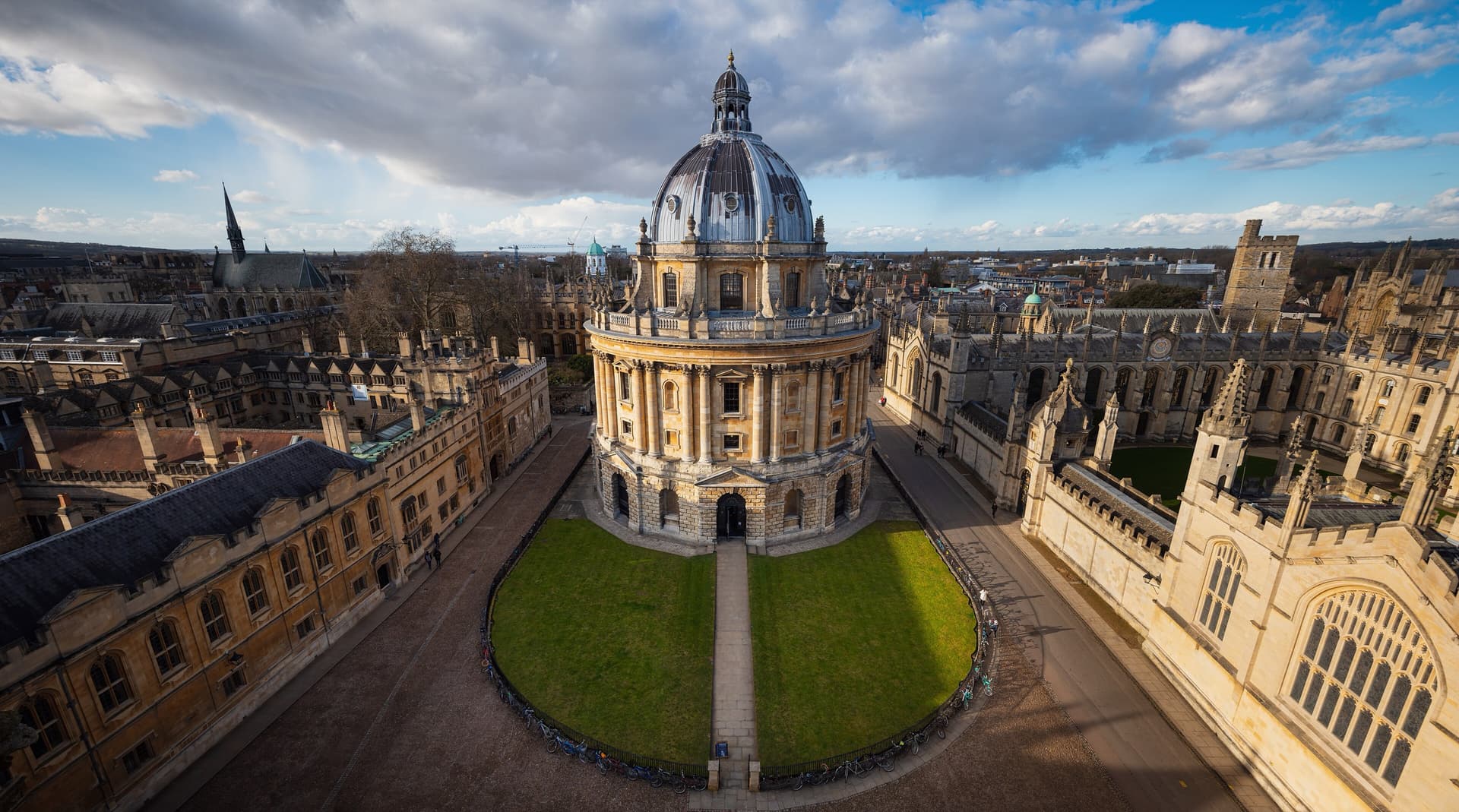
Cambridge · Photo: TheKaphox, CC0
TMUA past papers and original mocks, all timed online
- Past papers
- 22+
- Original mocks
- 9+
- Questions
- 866+
What the TMUA bank holds today
- questions
- 866
- papers
- 31
- official past papers
- 22
- with worked solutions
- 100%
- Easy
- 329
- Standard
- 420
- Hard
- 116
- Very hard
- 1
- Paper 111 papers · 222 questions
- Paper 211 papers · 222 questions
Counted live from published content. Every paper and question can be checked in the catalogue.
From a first taste to test day, in four steps
- 01
Try 5 questions
No account needed. The sample above is real TMUA difficulty, with instant marking and a method hint.
- 02
Sign up free
10 questions a day across all subjects with full solutions, at least 2 free papers per subject, analytics and review included.
- 03
Practise by topic
Build sets by topic, difficulty and length. Every solution explains the right method and why the other options fail.
- 04
Review, then decide
Mistake book, weakness radar and study plan are all free. Pay once per subject only when you want every paper and full mocks.
Six things TMUA preparation needs
Official past papers + originals
Every officially released paper organised by year, plus original papers written to the current format. Counts are in the numbers above.
A worked solution for every question
The right method, and why each wrong option is wrong. Solutions are verified, not generated once and left.
Topic radar and weak spots
Mastery by topic updates after every session; weak topics go straight into your study plan.
A timed, true-to-exam interface
Same timing, navigation and flagging as the real computer-based test, so nothing is new on the day.
Mistake book and review
Mistakes are grouped by cause; the review centre rebuilds a set of similar questions to try again.
English and Chinese
Questions, solutions and the interface in both languages, switchable at any time.
TMUA test dates
October sitting (2027 entry)
Booking opens
20 July, 3pm UK time
Booking closes
28 September, 6pm UK time
Test date
12-16 October (15 or 16 in mainland China, Hong Kong and Macau)
Results
16 November
January sitting (2027 entry)
Booking opens
28 October, 3pm UK time
Booking closes
21 December, 6pm UK time
Test date
4-8 January (8 January in mainland China, Hong Kong and Macau)
Results
8 February
Registration opens1 June 2026, 3pm UK time
Paper structure
Paper 1
Applications of Mathematical Knowledge
20 multiple-choice questions
Paper 2
Mathematical Reasoning
20 multiple-choice questions
Scoring
- 1Marks are awarded for correct answers and there is no penalty for wrong answers, so attempt every question.
- 2The two papers combine into a single overall score from 1.0 to 9.0 (to one decimal place); there is no per-paper threshold.
- 3There is no pass mark: universities weigh the score alongside A-levels and the rest of your application; it is one factor among several.
- 4UAT-UK publishes an official Explanation of Results for every sitting. For the October 2025 and January 2026 sittings: about 10% of candidates score above 7.0 (90th percentile fixed at 7.0) and the median is 4.5, which means the average Imperial Mathematics offer-holder, at 7.6, sits inside the national top 10%.
- 5UAT-UK publishes the release dates outright, so there is no need to count weeks: for 2027 entry the October sitting releases on 16 November 2026 and the January sitting on 8 February 2027, through your UAT-UK account and automatically to the institutions in your UCAS application that require the test.
- median 4.5
- 7.0 = designed top-10% line (UAT-UK scale)
UAT-UK (October 2025 and January 2026): scores are scaled so that about 10% of candidates score above 7.0 (90th percentile fixed at 7.0) and the median is 4.5; scores are capped at 1.0 and 9.0. No grade boundaries or pass mark are published. These anchors are set on the October sitting. Across both 2025-26 sittings (16,092 candidates) the median was 4.1 and the 90th percentile 6.7 (UAT-UK TMUA Technical Report 2025-26).
What the scores actually looked like
UAT-UK publishes a technical report for each of its tests every cycle. The 2025/26 report for the TMUA carries printed score distributions for every module and both sittings. The figures below are taken from that report, table by table.
| Module | Candidates | Median | Top 10% |
|---|---|---|---|
| TMUA | 16,092 | 4.1 | 6.7 |
| Module | Oct top 10% | Jan top 10% |
|---|---|---|
| TMUA | 7.0 | 5.9 |
How to read these numbers
- None of these is a cut-off. UAT-UK publishes no pass mark, and universities publish no fixed score threshold.
- A gap between the two sittings reflects who sat them, not how hard the papers were. Scaling is anchored to the October cohort and the same constants are applied to January.
- Scores cannot be compared across cycles: scaling is refixed every admissions cycle.
16,092 TMUA tests were delivered in 2025/26. 9685 sat in October and 6407 in January.
Universities & requirements
| Requirement | University | Courses | Notes |
|---|---|---|---|
| Required | University of Cambridge | Computer Science, Economics, Mathematics (from 2027 entry) | Standard applicants (15 October UCAS deadline) must take the October sitting; applicants to mature colleges with the January deadline may sit in January. Cambridge has never published a score threshold, and the numbers circulating online have no official source and mostly predate the 2024 rescaling. |
| Required | University of Oxford | Mathematics, Computer Science and all joint courses (from 2027 entry) | Oxford states that the MAT ran from 2007 to 2025 and that from 2026 it uses the TMUA instead, which is the 2027 entry cycle. The October sitting is required (except Astrophoria Foundation Year applicants with the January deadline). |
| Required | Imperial College London | Department of Computing (incl. joint Mathematics and Computer Science), Department of Mathematics, Business School (BSc Economics, Finance and Data Science) | TMUA replaced the MAT for Mathematics from 2025 entry, and both the October and January sittings are accepted. This is a choice of date, not a second chance: UAT-UK allows you to sit only once within an admissions cycle. |
| Required | LSE | Economics, Econometrics and Mathematical Economics | Required for the core economics courses; for other quantitative programmes (such as Financial Mathematics and Statistics) a score is recommended to strengthen your application. |
| Required | University of Warwick | Computer Science and Mathematics courses (required); Economics and Statistics courses (recommended) | On the official 2027-entry course list Warwick uses the TMUA for 16 courses: 7 where it is compulsory (three Computer Science courses, two Discrete Mathematics, two Mathematics, unless you qualify for a contextual offer) and 9 where it is recommended (Data Science, Economics, MathStat, MORSE and similar). Warwick’s maths department adds that any undergraduate Mathematics course requires either the TMUA or STEP, and that a low TMUA score does not rule you out: your application may instead be considered for an offer including STEP, though Warwick states this is not guaranteed. |
| Required | UCL | BSc Economics (L100) and BSc Economics with Study Abroad (L101) | On the official 2027-entry course list UCL uses the TMUA for two Economics courses, L100 and L101. Note that UCL also uses the other two tests: Electronic and Electrical Engineering takes the ESAT and Computer Science and related courses take the TARA, so the requirement is set course by course, not by university. |
| Recommended | Durham University | Four mathematics courses (G100 / G103 / G111 / G114) | Optional: a TMUA score of 5.0+ automatically qualifies you for a one-grade-reduced offer (e.g. A*A*A → A*AA). |
Find your course
For 2027 entry, 38 courses across 6 universities require the TMUA, and 22 more list it as optional or recommended. Each page below covers one department's degrees with every UCAS code, how the score is used, and the key dates.
Imperial College London
University of Cambridge
University of Warwick
The London School of Economics and Political Science
University of Oxford
Durham University
Prepare module by module
27 in-depth guides for the TMUA: what each module actually tests, how to build a revision plan around it, how the marks work, and what to do on test day.
TMUA topic by topic
How scores compare
- 01Imperial has published real department-level data, and is currently the only university to do so. Among 2025-entry offer-holders the mean TMUA score was 7.6 for Mathematics, 7.5 for Joint Mathematics and Computing, 6.2 for Computing and 5.3 for the Business School. There is no single answer to “what score is enough”: within one university the departments differ by more than two points.
- 02If you are applying from outside the UK, read the Overseas column. In the same Imperial data the mean among Overseas offer-holders is higher in every department: 8.4 for Mathematics against 7.0 for Home, 7.9 for Joint Mathematics and Computing, 6.5 for Computing and 5.9 for the Business School, while Overseas offer rates are lower. The two other universities that publish thresholds sit a long way below this: Durham treats 5.0 or above as automatically eligible for a one-grade-reduced offer (A*A*A→A*AA), and at Warwick the majority of offers last cycle went to applicants on 5.0 and above.
- 03When you see a target score, ask three things: which year, which scale, and who published it. The TMUA scale changed in 2024, and Durham states that a score of 6.5 from 2023 equates to 5.0 from 2024 onwards, so pre-2024 numbers do not transfer. The reverse is also true: do not dismiss high targets, because Imperial’s 7.6 for Mathematics is on the current scale. Primary sources: Imperial's score dashboard and the official score distribution.
Scaled score out of 9, by department
Historic averages, not thresholds; Imperial states a high score does not guarantee an offer.
Exam analysis
- 01Scores run from 1.0 to 9.0 on a single overall scale; there is no traditional "full marks" to chase.
- 02Each paper is 20 questions in 75 minutes. Paper 1 tests applied mathematical knowledge (algebra and functions, sequences, coordinate geometry, trigonometry, exponentials and logarithms, differentiation, integration, graphs), while Paper 2 adds argument and proof (logic, necessary and sufficient, quantifiers, the four proof types, spotting errors in proofs). The two papers have different specification scopes and need separate preparation.
- 03Time management and the computer-based format materially affect performance. Twenty questions in 75 minutes works out at about 3 minutes 45 seconds each, which is an arithmetic pacing guide rather than anything official. Practise recent past papers under timed conditions and build rapid recognition of the common question types.
Share of candidates by TMUA score band, drawn to the official distribution anchors
Indicative shape drawn to the official anchors: the UAT-UK Explanation of Results (October 2025 and January 2026) states that scores are scaled so that about 10% of candidates score above 7.0 (90th percentile fixed at 7.0) and the median is 4.5, capped at 1.0 and 9.0. For exact per-band shares, see the chart in the official document.
Frequently asked questions
Are both TMUA papers taken in one sitting?
Can I use a calculator or dictionary?
How should I practise for the TMUA?
When do results come out, and how long are they valid?
How do my scores reach the universities?
Process
How It Works
01
Sign Up
02
Choose Your Exam
03
Start Practicing
There is no waiting step in between. You can open a paper the moment you register.
See the papers for this examHow far free goes for TMUA, and what a purchase adds
Free
- 10 questions a day per account, across all subjects, each with a full solution
- At least 2 free papers per subject, plus a 5-question taster before you sign up
- Analytics, mistake book and review centre fully open
Pay once per subject
- Every TMUA past paper and original paper
- Full mock exams (twice a year by the Frontier team)
- New content included for a year, then renew the update window annually
Struggling to pay? Apply for a bursary and, if approved, get one subject free. About the bursary
UAT-UK, Pearson, OCR, the University of Cambridge, Imperial College London and other names and logos belong to their respective owners.
Ready to start your TMUA prep?
Timed past-paper practice plus a computer-based mock interface, from foundations to final sprint in one place.