TARA · Exam guide
TARA Test 2026: Format, Dates & Prep
The academic reasoning test for social science, computer science and management applicants (three 40-minute modules: critical thinking, problem solving and writing).
- Format
- 3 × 40 min
- Questions
- 22 + 22 MCQs + 1 essay
- Restrictions
- No calculator / dictionary
- Scores
- CT / PS each 1.0 – 9.0
33
past papers
19
mocks
2,154
questions
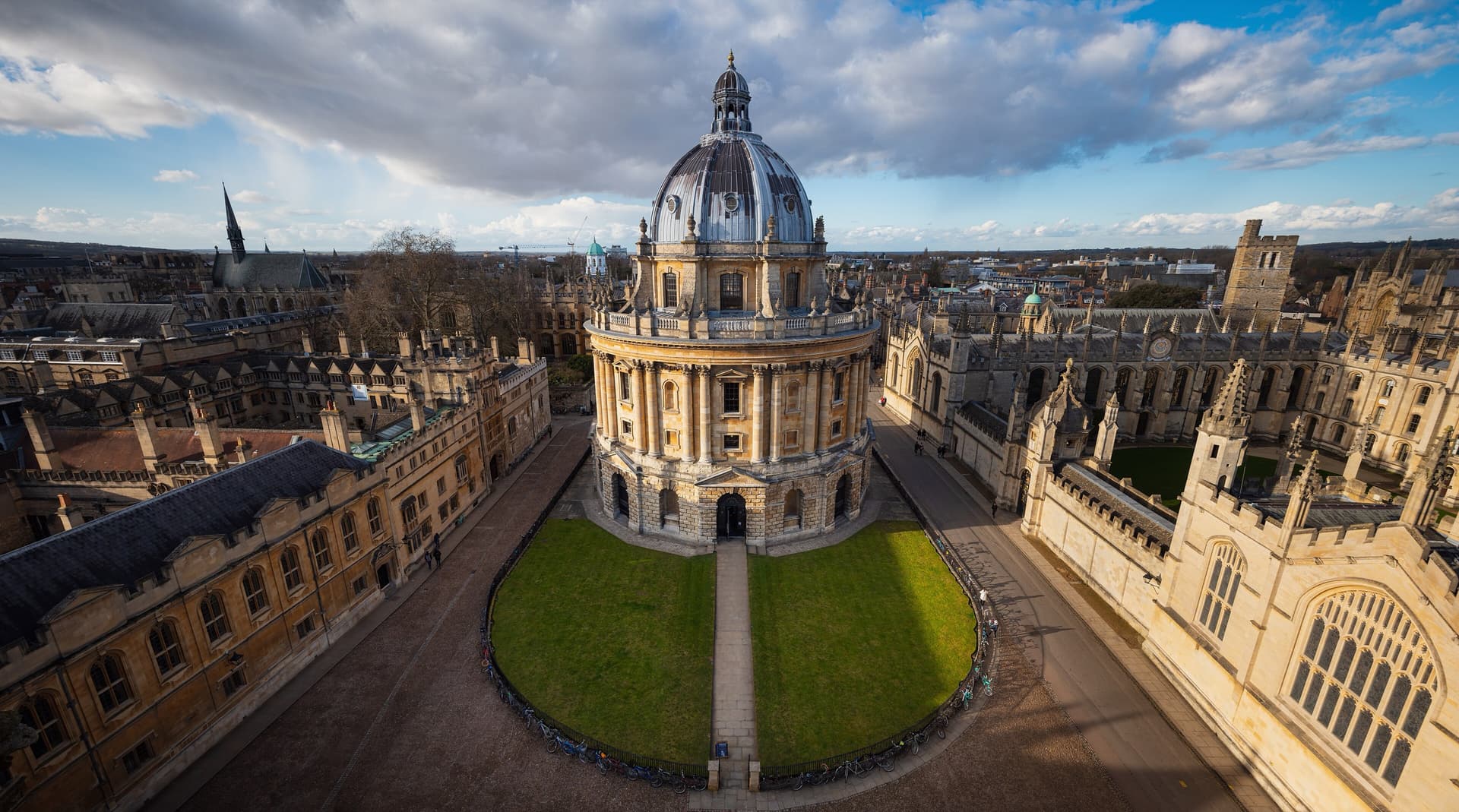
Oxford · Photo: Julian Herzog, CC BY 4.0
TARA past papers and original mocks, all timed online
- Past papers
- 33+
- Original mocks
- 19+
- Questions
- 2154+
- TARA past papers
- TARA full question bank
- BMAT past papers (20 papers)
- TSA past papers (13 papers)
- TARA results day: dates and how to read your score
What the TARA bank holds today
- questions
- 2154
- papers
- 52
- official past papers
- 33
- with worked solutions
- 86%
- Easy
- 344
- Standard
- 1366
- Hard
- 444
- Very hard
- 0
- Section 133 papers · 1343 questions
- Writing Task1 paper · 1 question
Counted live from published content. Every paper and question can be checked in the catalogue.
From a first taste to test day, in four steps
- 01
Try 5 questions
No account needed. The sample above is real TARA difficulty, with instant marking and a method hint.
- 02
Sign up free
10 questions a day across all subjects with full solutions, at least 2 free papers per subject, analytics and review included.
- 03
Practise by topic
Build sets by topic, difficulty and length. Every solution explains the right method and why the other options fail.
- 04
Review, then decide
Mistake book, weakness radar and study plan are all free. Pay once per subject only when you want every paper and full mocks.
Six things TARA preparation needs
Official past papers + originals
Every officially released paper organised by year, plus original papers written to the current format. Counts are in the numbers above.
A worked solution for every question
The right method, and why each wrong option is wrong. Solutions are verified, not generated once and left.
Topic radar and weak spots
Mastery by topic updates after every session; weak topics go straight into your study plan.
A timed, true-to-exam interface
Same timing, navigation and flagging as the real computer-based test, so nothing is new on the day.
Mistake book and review
Mistakes are grouped by cause; the review centre rebuilds a set of similar questions to try again.
English and Chinese
Questions, solutions and the interface in both languages, switchable at any time.
TARA test dates
October sitting (2027 entry)
Booking opens
20 July, 3pm UK time
Booking closes
28 September, 6pm UK time
Test date
12-16 October (14 October in mainland China, Hong Kong and Macau)
Results
16 November
January sitting (2027 entry)
Booking opens
28 October, 3pm UK time
Booking closes
21 December, 6pm UK time
Test date
4-8 January (7 January in mainland China, Hong Kong and Macau)
Results
8 February
Registration opens1 June 2026, 3pm UK time
Paper structure
Critical Thinking
Critical thinking
22 multiple-choice questions (5 options)
Problem Solving
Problem solving
22 multiple-choice questions (5 options)
Writing Task
Writing task
Choose 1 of 3 prompts, up to 750 words
The full sitting
What happens in the 120 minutes of the TARA
Three modules run back to back, with no break.
01
Critical Thinking
40 min
22 multiple-choice questions
Scored
02
Problem Solving
40 min
22 multiple-choice questions
Scored
03
Writing Task
40 min
0 / 750 words (max)
Not scored
The part candidates misread
UAT-UK does not score the Writing Task, but a copy of your response goes to the universities you applied to.
It does not move your 1.0 to 9.0, yet the people who decide your offer will read it.
There is no negative marking, so never leave a question blank.
Sent to your universities
Scoring
- 1The two multiple-choice modules are marked on correct answers with no penalty for wrong answers: attempt everything.
- 2Critical Thinking and Problem Solving each receive their own score from 1.0 to 9.0 (to one decimal place); they are not merged into a single total.
- 3The Writing Task receives no 1–9 score: your essay is supplied to the universities alongside your results, and they assess it themselves.
- 4There is no pass mark: universities weigh the scores alongside A-levels, personal statement, interview and the rest of your application.
- 5UAT-UK publishes an official Explanation of Results: the scale is designed so typical candidates score around 4.5, with roughly 10% above 7.0, capped at 1.0 and 9.0 (combined October 2025 and January 2026 edition, with distribution charts for both modules).
- 6To turn the correct answers from a practice set into an estimate on this scale, use the TARA score calculator; for what is a good TARA score, see the statistics guide.
- median 4.5
- 7.0 = designed top-10% line (UAT-UK scale)
UAT-UK (October 2025 and January 2026): scores are scaled so that about 10% of candidates score above 7.0 (90th percentile fixed at 7.0) and the median is 4.5; scores are capped at 1.0 and 9.0. No grade boundaries or pass mark are published. These anchors are set on the October sitting; figures for both 2025-26 sittings together differ by module (UAT-UK TARA Technical Report 2025-26).
What the scores actually looked like
UAT-UK publishes a technical report for each of its tests every cycle. The 2025/26 report for the TARA carries printed score distributions for every module and both sittings. The figures below are taken from that report, table by table.
| Module | Candidates | Median | Top 10% |
|---|---|---|---|
| Critical Thinking | 2,626 | 4.0 | 6.7 |
| Problem Solving | 2,626 | 4.7 | 7.0 |
| Module | Oct top 10% | Jan top 10% |
|---|---|---|
| Critical Thinking | 7.0 | 6.6 |
| Problem Solving | 7.0 | 7.0 |
How to read these numbers
- None of these is a cut-off. UAT-UK publishes no pass mark, and universities publish no fixed score threshold.
- A gap between the two sittings reflects who sat them, not how hard the papers were. Scaling is anchored to the October cohort and the same constants are applied to January.
- Scores cannot be compared across cycles: scaling is refixed every admissions cycle.
2626 TARA tests were delivered in 2025/26. 976 sat in October and 1650 in January.
Universities & requirements
| Requirement | University | Courses | Notes |
|---|---|---|---|
| Required | University of Oxford | 10 courses: Economics and Management (LN12), Experimental Psychology (C830), History and Economics (LV11), History and Politics (LV21), Human Sciences (BCL0), Philosophy and Linguistics (VQ51), Philosophy, Politics and Economics (L0V0), PPE with Foundation Year (L0VF), Psychology and Linguistics (CQ81), Psychology and Philosophy (CV85) | Adopts the TARA from 2027 entry, replacing the TSA. All three modules are compulsory, and apart from the Astrophoria Foundation Year (PPE with Foundation Year, L0VF, can be sat in October or January) only the October sitting is accepted (to fit the UCAS deadline). One easily missed difference: the course pages for Economics and Management (LN12) and History and Economics (LV11) state that candidates applying only to that course, and to no other course that requires the TARA, do not need to complete the Writing Task, and may finish after the 40-minute Critical Thinking and Problem Solving modules; if you also apply to another TARA course that requires the Writing Task, complete it for that application. Note that single-honours History does not require the TARA, and Computer Science (G400) requires the TMUA instead. |
| Required | UCL | 6 courses: Computer Science BSc (G400), Computer Science MEng (G402), Computer Science and Mathematics MEng (G430), Mechanical Engineering BEng (H300), Mechanical Engineering MEng (H301), Robotics and Artificial Intelligence MEng (H700) | UCL was the first to adopt the TARA, from 2026 entry. The 2027-entry list changed substantially: the social-science routes no longer use the TARA, with ESPS, ISPS and the ESPS Dual Degree moving to UCL's own Thinking Skills Test and Sociology, Social Sciences and Management Science requiring no admissions test for 2027 entry, while Mechanical Engineering joins the TARA for the first time. All three modules are compulsory. |
Find your course
Sixteen courses require the TARA for 2027 entry. Each has its own page with the UCAS code, what the three modules mean for that course, and the key dates.
University of Oxford
- Economics and ManagementLN12
- Experimental PsychologyC830
- History and EconomicsLV11
- History and PoliticsLV21
- Human SciencesBCL0
- Philosophy and LinguisticsVQ51
- Philosophy, Politics and Economics with Foundation YearL0VF
- Philosophy, Politics and EconomicsL0V0
- Psychology and LinguisticsCQ81
- Psychology and PhilosophyCV85
Prepare module by module
16 in-depth guides for the TARA: what each module actually tests, how to build a revision plan around it, how the marks work, and what to do on test day.
How scores compare
- 01The TARA is new, so historical score data is limited; going by experience with the TMUA/ESAT in the same family, 7.0 or above is usually strongly competitive.
- 02The two module scores are reported separately: check course by course whether your target weighs critical thinking or problem solving more heavily.
- 03Always check each university’s website for the latest policy.
Compiled from the official UAT-UK Course List for 2027 entry
| University | Courses | Requirement |
|---|---|---|
| University of Oxford | 10 course entries: 9 undergraduate courses (E&M, PPE, Experimental Psychology, Human Sciences, History and Economics, History and Politics, Psychology and Philosophy, Philosophy and Linguistics, Psychology and Linguistics) plus the PPE Foundation Year | October sitting only; all modules compulsory |
| UCL | 6 courses: 4 in Computer Science (BSc, MEng, CS and Mathematics MEng, Robotics and AI MEng) plus Mechanical Engineering BEng and MEng | All modules compulsory |
No university has published TARA score statistics: October 2026 is the first sitting counted by Oxford, and UCL states scores are weighed alongside the full UCAS application with no minimum score. Official anchors: typical candidates around 4.5 per module, roughly 10% above 7.0.
Exam analysis
- 01The three modules run back to back for about 120 minutes in total; with under 2 minutes per multiple-choice question, the pace is far quicker than the TMUA, rewarding fast reading and decision-making.
- 02Critical Thinking descends directly from the argument-analysis questions of the BMAT/TSA, so plenty of comparable legacy material exists to train on; Problem Solving needs only basic maths: the challenge is the speed of information extraction and modelling.
- 03The Writing Task is one prompt from three, 750 words, 40 minutes; the structure (explain → counter-argue → take a position) is essentially fixed, so rehearsing templates and timed writing pays off handsomely.
Share of candidates by TARA module score band (each module 1.0–9.0), drawn to the official anchors
Indicative shape drawn to the official anchors: the UAT-UK TARA Explanation of Results (combined October 2025 and January 2026 sittings) states that for each module scores are scaled so that about 10% of candidates score above 7.0 (90th percentile fixed at 7.0) and the median is 4.5, capped at 1.0 and 9.0. The official document includes separate distribution charts for Critical Thinking and Problem Solving; refer to them for exact per-band shares. The Writing Task is not scored; universities read the responses directly.
How FrontierVUE's 1,468 TARA questions map onto the official question types
- Finding Procedures474
- Relevant Selection149
- Identifying Similarity132
- Drawing a Conclusion128
- Assessing the Impact of Additional Evidence112
- Detecting Reasoning Errors107
- Identifying an Assumption100
- Identifying the Main Conclusion99
- Matching Arguments57
- Applying Principles47
- Problem Solving (unclassified)44
- Writing Task19
This is the distribution of FrontierVUE's own question bank, not of the live exam. The TARA was first sat in October 2025, but UAT-UK has not published a breakdown by question type. The type names are taken from the official taxonomy (7 Critical Thinking types, 3 Problem Solving types).
Frequently asked questions
How does the TARA relate to the TMUA / ESAT?
Which universities and courses require the TARA?
How is the Writing Task assessed?
Can I use a calculator or dictionary?
How should I prepare?
Process
How It Works
01
Sign Up
02
Choose Your Exam
03
Start Practicing
There is no waiting step in between. You can open a paper the moment you register.
See the papers for this examHow far free goes for TARA, and what a purchase adds
Free
- 10 questions a day per account, across all subjects, each with a full solution
- At least 2 free papers per subject, plus a 5-question taster before you sign up
- Analytics, mistake book and review centre fully open
Pay once per subject
- Every TARA past paper and original paper
- Full mock exams (twice a year by the Frontier team)
- New content included for a year, then renew the update window annually
Struggling to pay? Apply for a bursary and, if approved, get one subject free. About the bursary
UAT-UK, Pearson, OCR, the University of Cambridge, Imperial College London and other names and logos belong to their respective owners.
Ready to start your TARA prep?
Timed past-paper practice plus a computer-based mock interface, from foundations to final sprint in one place.